Most SEO advice for small businesses is anecdotal. It usually starts with one site, one audit, or one list of "common mistakes." We wanted a broader view.
So we scanned 10,000 public US service-business websites across home services, health services, professional services, marketing and B2B services, and local consumer services. Each site was evaluated with the same VectraSEO health rules used by our monitoring product.
The goal was simple: understand what everyday SMB SEO health actually looks like.
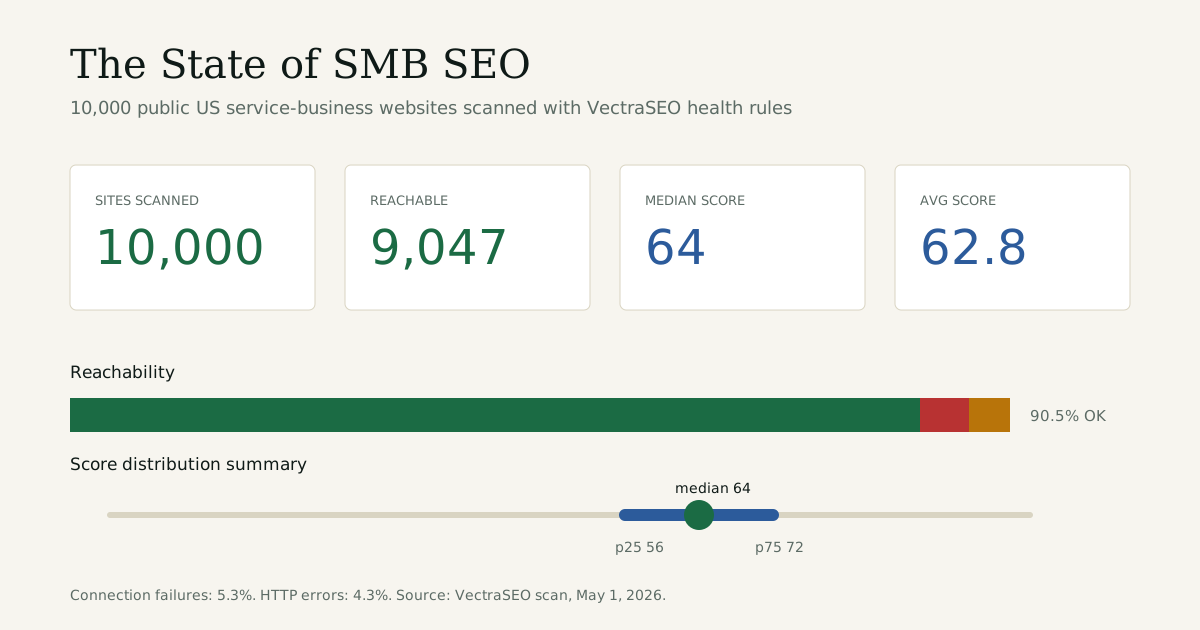
The short version
Out of 10,000 public US service-business websites:
- 9,047 sites were reachable and returned a successful HTTP response.
- 526 had connection-level failures such as DNS, SSL, connection, or timeout problems.
- 427 returned HTTP error statuses while still responding.
- The median health score among reachable sites was 64/100.
- The average health score was 62.8/100.
- The middle 50% of reachable sites scored between 56 and 72.
That means the typical SMB site is not catastrophically broken. It is carrying a stack of quiet issues that compound over time.
The most common issues
Among the 9,047 reachable sites, the most common findings were slow responses, static performance risks, image SEO and layout issues, missing social metadata, sitemap hygiene problems, and weak internal-link crawlability.
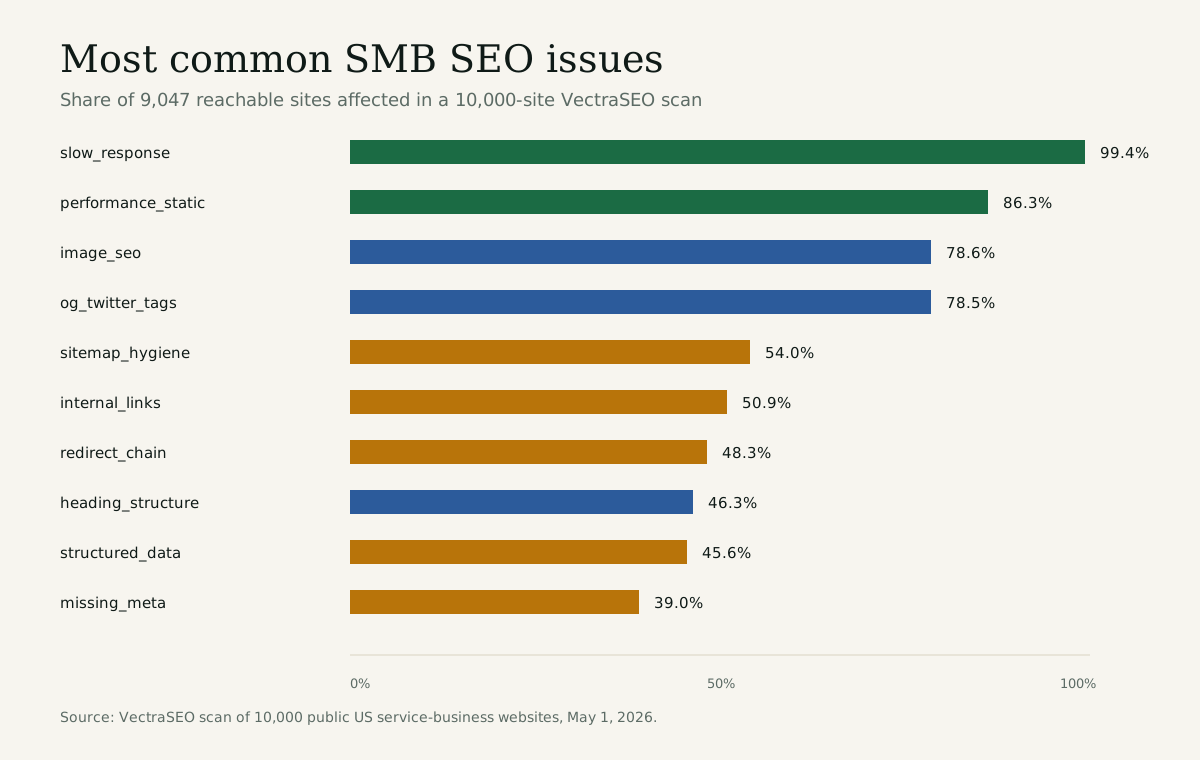
The top findings:
| Issue | Sites affected | Share of reachable sites |
|---|---|---|
| Slow response | 8,997 | 99.4% |
| Static performance risks | 7,804 | 86.3% |
| Image SEO and layout issues | 7,107 | 78.6% |
| Missing OG/Twitter tags | 7,106 | 78.5% |
| Sitemap hygiene issues | 4,888 | 54.0% |
| Internal link crawlability issues | 4,608 | 50.9% |
| Redirect chain issues | 4,373 | 48.3% |
| Heading structure issues | 4,193 | 46.3% |
| Missing or broken structured data | 4,125 | 45.6% |
| Missing meta descriptions | 3,531 | 39.0% |
The surprising part was not that these issues exist. It was how often they appear on otherwise normal business websites.
Why this matters
Most SMBs do not lose search visibility because of one dramatic technical failure.
They lose it through accumulation.
A slow homepage here. A bloated image there. A sitemap full of weak URLs. A missing meta description on a service page. A social preview that makes every shared link look generic. Internal links that do not make priority pages obvious.
Individually, these are not emergencies. Together, they make the site harder to crawl, harder to understand, and less compelling when it appears in search or gets shared.
What to fix first
If you run a small-business website, do not start with a giant SEO roadmap. Start with the boring fixes that showed up everywhere:
- Make the homepage and top service pages respond quickly.
- Compress and size images properly.
- Add useful alt text where images communicate meaning.
- Clean up sitemap URLs.
- Make internal links point clearly to the pages that make money.
- Add structured data for the business, services, and local presence.
- Fix redirect chains and obvious broken/error responses.
- Add complete title, meta description, OG, and Twitter tags.
That is not glamorous work, but it is the kind of work that compounds.
Methodology
We used DataForSEO Business Listings to build a 10,000-site corpus from public US service-business listings. We filtered out social/profile URLs, deduplicated domains, balanced the sample across five service-business groups, and scanned each website with VectraSEO's SEO health rules.
The scanner evaluated HTTP reachability, response behavior, metadata, headings, image quality signals, sitemap hygiene, internal links, structured data, redirect behavior, crawl blockers, and other technical SEO signals.
We are publishing aggregate findings only. We are not publishing a named directory of businesses or raw listing data.
Important caveat: this is a public-web scan, not a logged-in crawl. Some sites block bots, some listings point to stale domains, and some failures are infrastructure or directory-quality findings rather than page-level SEO findings. We classify connection failures and HTTP errors separately for that reason.
Compare your site
We built VectraSEO to make this kind of monitoring continuous instead of occasional.
If you want to see how your own site stacks up, run the free audit and compare your result against this benchmark.
If you are choosing software after that audit, start with the practical buying pages: best SEO tools under $50, VectraSEO vs Frase, and VectraSEO vs Surfer SEO.
You can also read the full aggregate report here: Silent Traffic Killers.